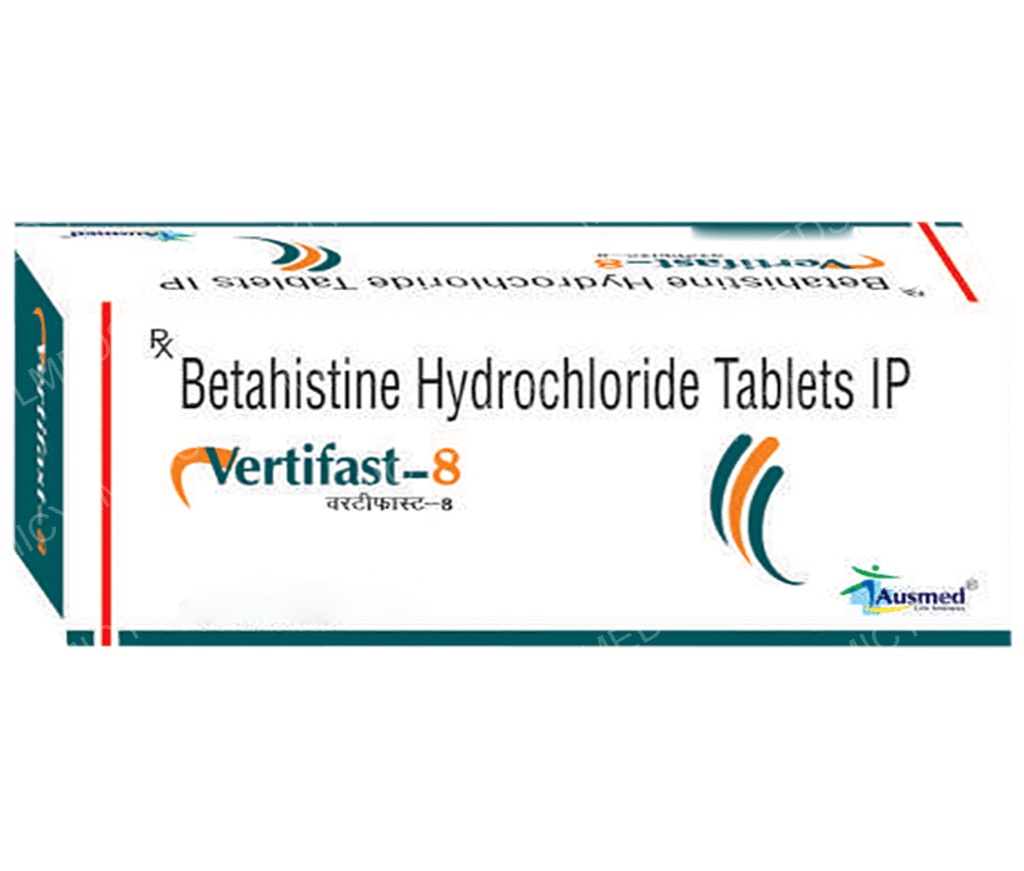

Vertidoc 16mg Tablet
 Item requires a valid prescription
Manufactured By Morepen Laboratories Ltd
Composition Betahistine (16mg)
Rs 57.75
MRP Rs 65.63
(12% OFF)
Includes all taxes
Product Type
Tablet
Package SIZE
( strip of 10 tablets )

100% Authentic
Products

Free
Shipping*

Products
Return Policy
Description: Product introduction Vertidoc 16mg Tablet is used to prevent and treat a disorder of the inner ear known as Ménière’s disease. The symptoms include dizziness (vertigo), ringing in the ears (tinnitus), and loss of hearing, probably caused by fluid in the ear. This medicine helps relieve the symptoms by reducing the amount of fluid. Vertidoc 16mg Tablet should be swallowed whole with water and taken at the same time(s) each day to get the most benefit. Your doctor will decide what is the correct dose to relieve your symptoms and how often you need to take it. You may need to take this medicine for several months and you should take it for as long as prescribed by your doctor, even if you start feeling better. The most common side effects include headache, feeling sick, and indigestion (dyspepsia). You may also get stomach pain and bloating. Taking the medicine with food can help reduce stomach problems. Before taking this medicine, you should talk to your doctor if you have a stomach ulcer, asthma, or high or low blood pressure. You must also tell him/her what other medicines you are taking, to make sure you are safe. Also speak to your doctor if you are pregnant, trying to become pregnant, or breastfeeding.
- Product composition:
- Betahistine (16mg)
- Pregnancy interaction:
- Safety advice 1. Alcohol Status: SAFE Description: Consuming alcohol with Vertidoc 16mg Tablet does not cause any harmful side effects. 2. Pregnancy Status: CONSULT YOUR DOCTOR Description: Vertidoc 16mg Tablet may be unsafe to use during pregnancy. Although there are limited studies in humans, animal studies have shown harmful effects on the developing baby. Your doctor will weigh the benefits and any potential risks before prescribing it to you. Please consult your doctor. 3. Breast feeding Status: CONSULT YOUR DOCTOR Description: Vertidoc 16mg Tablet is probably unsafe to use during breastfeeding. Limited human data suggests that the drug may pass into the breastmilk and harm the baby. 4. Driving Status: SAFE Description: Vertidoc 16mg Tablet does not usually affect your ability to drive. 5. Kidney Status: SAFE IF PRESCRIBED Description: Vertidoc 16mg Tablet is probably safe to use in patients with kidney disease. Limited data available suggests that dose adjustment of Vertidoc 16mg Tablet may not be needed in these patients. Please consult your doctor. 6. Liver Status: CONSULT YOUR DOCTOR Description: There is limited information available on the use of Vertidoc 16mg Tablet in patients with liver disease. Please consult your doctor.
- Side Effects:
- Side effects of Vertidoc Tablet Most side effects do not require any medical attention and disappear as your body adjusts to the medicine. Consult your doctor if they persist or if you’re worried about them Common side effects of Vertidoc Headache Indigestion Nausea Stomach pain Bloating
- How to use:
- How to use Vertidoc Tablet INSTRUCTIONS: Take this medicine in the dose and duration as advised by your doctor. Swallow it as a whole. Do not chew, crush or break it. Vertidoc 16mg Tablet may be taken with or without food, but it is better to take it at a fixed time.
- How it works:
- How Vertidoc Tablet works CONTENT: Vertidoc 16mg Tablet is a histamine analog. It works by improving the blood flow in the inner ear which reduces the pressure of excess fluid there. Excess fluid can send signals to the brain causing nausea, dizziness or spinning sensations (symptoms of Ménière's disease). Vertidoc 16mg Tablet additionally dampens down the nerve signals sent from the inner ear to the brain relieving the symptoms of Ménière's disease.
- Faq for medicine:
- Q1: What is Meniere's disease? Does it go away? A1: Meniere's disease is a disorder of the balance and hearing organs in the inner ear. The symptoms include vertigo, fluctuations in hearing, tinnitus (ringing of the ears), and pressure in the ears. Along with that, one may experience dizziness which in turn may cause nausea and vomiting. The treatment for Meniere's disease depends on various factors. Hence, an open discussion with the doctor can help to determine the best treatment strategy in your personal case. Q2: Is stress a reason for vertigo? A2: Mental stress can trigger vertigo. It can make many forms of vertigo worse, but will not, by itself, produce vertigo. Q3: What are the causes of vertigo? A3: Vertigo may be caused either by a sudden drop in blood pressure or because of being dehydrated. Many people feel lightheaded if they get up too quickly from sitting or lying down. Along with that, motion sickness, certain medicines, and problems with your inner ear (Meniere's disease, acoustic neuroma) may cause vertigo. It is important to know that sometimes vertigo can be a symptom of other disorders (multiple sclerosis, following head trauma) as well. Q4: How long should Vertidoc 16mg Tablet be taken? A4: Duration of treatment with Vertidoc 16mg Tablet may vary from patient to patient. Some people respond rapidly to treatment while others may take some time. Hence, it is advised to take your tablets regularly and wait for the results patiently. Consult the doctor if not sure. Q5: What are the common side effects of Vertidoc 16mg Tablet? A5: Vertidoc 16mg Tablet can cause mild stomach problems such as vomiting, stomach pain, stomach swelling (abdominal distension), and bloating. You can reduce the chances of getting these side effects by taking Vertidoc 16mg Tablet with food. However, the absorption of Vertidoc 16mg Tablet may get reduced when taken with food. Q6: Is Vertidoc 16mg Tablet effective? A6: Vertidoc 16mg Tablet is effective if used in the dose and duration advised by your doctor. Do not stop taking it even if you see improvement in your condition. If you stop using Vertidoc 16mg Tablet too early, the symptoms may return or worsen. Q7: What if I forget to take a dose of Vertidoc 16mg Tablet? A7: If you forget a dose of Vertidoc 16mg Tablet, take it as soon as you remember. However, if it is almost time for your next dose, skip the missed dose and take the next dose at the scheduled time. Do not double the dose to make up for the missed one as this may increase the chances of developing side effects. Q8: How long should Vertidoc 16mg Tablet be taken? A8: Duration of treatment with Vertidoc 16mg Tablet may vary from patient to patient. Some people respond rapidly to treatment while others may take some time. Hence, it is advised to take your tablets regularly and wait for the results patiently. Consult the doctor if not sure.
- Medicine interaction:
- Interaction with drugs DESCRIPTION: Taking Vertidoc with any of the following medicines can modify the effect of either of them and cause some undesirable side effects DRUG INTERACTIONS: 1. Selegiline(Oral Route)Moderate Description: Talk to your doctor if you experience Betahistine side effects such as gastrointestinal disturbances, headache, or rash. Selegiline may decrease the metabolism of Betahistine. 2. Tranylcypromine(Oral Route)Moderate Description: Talk to your doctor if you experience Betahistine side effects such as gastrointestinal disturbances, headache, or rash. Tranylcypromine may decrease the metabolism of Betahistine. ... More 3. Azelastine(Eye Route)Moderate Description: Use Azelastine with Betahistine only if prescribed by your doctor. Azelastine may block the action of Betahistine. 4. Rasagiline(Oral Route)Moderate Description: Talk to your doctor if you experience Betahistine side effects such as gastrointestinal disturbances, headache, or rash. Rasagiline may decrease the metabolism of Betahistine. 5. Azelastine(Nasal Route)Moderate Description: Use Azelastine with Betahistine only if prescribed by your doctor. Azelastine may block the action of Betahistine.